
Why the UAE Is One of the World's Strongest Property Investment Markets
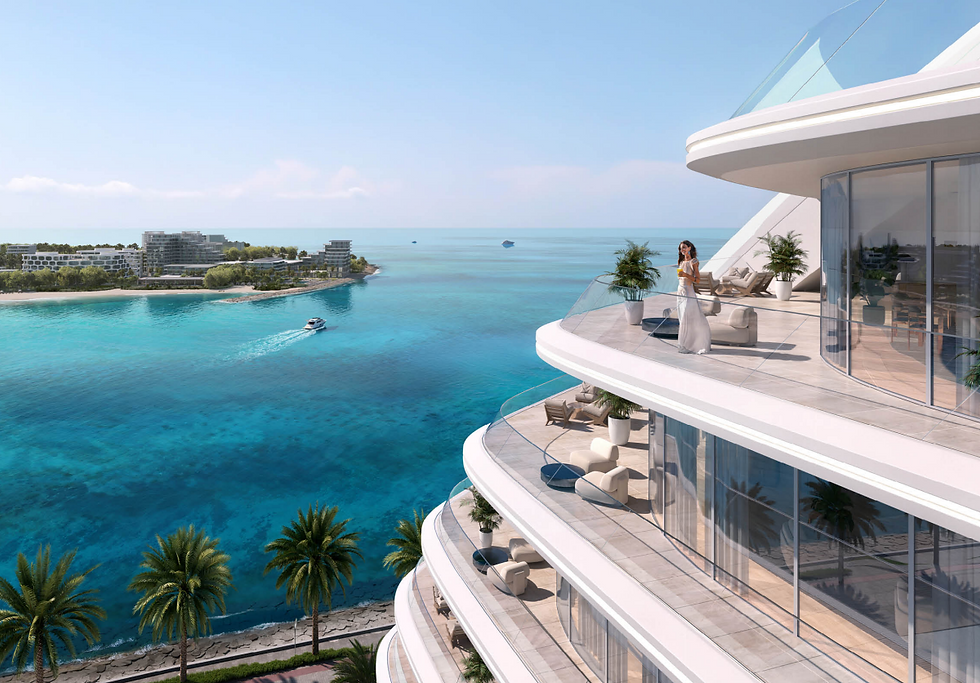
Why the UAE Is One of the World's Strongest Property Investment Markets
Ask a property investor in almost any major city what their asset actually earns them, and you will get two answers. There is the number on the brochure, and there is the number that reaches their account. The gap between the two is where most of the interesting story lives.
Consider a London flat. The owner is quoted a yield, and it sounds respectable enough. Then the council tax obligations arrive. Income tax takes its share of the rent at whatever the owner's marginal rate happens to be. When the property is eventually sold, the taxman takes a slice of the gain as well. Somewhere between the brochure and the bank statement, a meaningful portion of the return has quietly gone elsewhere.
Now consider what happens in New York, where an annual levy is charged against the property's capital value every single year. It does not matter whether the flat is let or sitting empty between tenants. It does not matter whether values rose that year or fell. The charge arrives regardless, it grows as the asset appreciates, and across a decade of ownership it consumes a substantial share of what the property is worth. The owner is, in a real sense, renting their own asset from the state.
The UAE does none of this!
An individual who owns property here in their own name pays:
No annual property tax
No personal income tax on the rent
No capital gains tax when the property is sold
No inheritance tax when the property is passed on
This is not a promotional window or a concession restricted to a special economic zone. It is the federal position across Dubai, Abu Dhabi and Ras Al Khaimah, and it has been in place for years.
The practical consequence is that gross yield and net yield sit unusually close together here, which is genuinely rare in any major global market. The number you are quoted is close to the number you keep.
Everything else in this article follows from that.
What Gross Yield Does Not Tell You
Gross yield is the rent a property produces before its expenses are deducted. Net yield is what actually remains after the costs of owning and operating it have been paid.
The distinction matters because two properties advertising the same gross yield can produce very different amounts of usable income.
A property may still have:
Service charges
Maintenance
Management costs
Periods without a tenant
Mortgage costs, if it is financed
These are real expenses and must be included in any honest calculation.
What the UAE removes is another expensive layer: recurring taxation simply for earning from, holding or eventually selling the asset.
That is why the comparison with another country cannot stop at the advertised rental yield. An investor has to ask what proportion of the rent will actually reach their account and how much of a future gain they will be allowed to keep.
A market offering a slightly lower gross yield but allowing the investor to retain nearly all of it can be more profitable than a market advertising a higher yield that is repeatedly reduced by tax.
The relevant number is not what the property earns before everyone takes their share. It is what remains afterwards.
Consider a London flat. The owner is quoted a yield, and it sounds respectable enough. Then the council tax obligations arrive. Income tax takes its share of the rent at whatever the owner’s marginal rate happens to be. When the property is eventually sold, the taxman takes a slice of the gain as well. Somewhere between the brochure and the bank statement, a meaningful portion of the return has quietly gone elsewhere.
Now consider what happens in New York, where an annual levy is charged against the property’s capital value every single year. It does not matter whether the flat is let or sitting empty between tenants. It does not matter whether values rose that year or fell. The charge arrives regardless, it grows as the asset appreciates, and across a decade of ownership it consumes a substantial share of what the property is worth. The owner is, in a real sense, renting their own asset from the state.
The UAE does none of this!
An individual who owns property here in their own name pays:
No annual property tax
No personal income tax on the rent
No capital gains tax when the property is sold
No inheritance tax when the property is passed on
This is not a promotional window or a concession restricted to a special economic zone. It is the federal position across Dubai, Abu Dhabi and Ras Al Khaimah, and it has been in place for years.
The practical consequence is that gross yield and net yield sit unusually close together here, which is genuinely rare in any major global market. The number you are quoted is close to the number you keep.
Everything else in this article follows from that.
What Gross Yield Does Not Tell You
Gross yield is the rent a property produces before its expenses are deducted. Net yield is what actually remains after the costs of owning and operating it have been paid.
The distinction matters because two properties advertising the same gross yield can produce very different amounts of usable income.
A property may still have service charges, maintenance, management costs and periods without a tenant. If it is financed, it will also have mortgage costs. These are real expenses and must be included in any honest calculation.
What the UAE removes is another expensive layer: recurring taxation simply for earning from, holding or eventually selling the asset.
That is why the comparison with another country cannot stop at the advertised rental yield. An investor has to ask what proportion of the rent will actually reach their account and how much of a future gain they will be allowed to keep.
A market offering a slightly lower gross yield but allowing the investor to retain nearly all of it can be more profitable than a market advertising a higher yield that is repeatedly reduced by tax.
The relevant number is not what the property earns before everyone takes their share. It is what remains afterwards.
The relevant number is not what the property earns before everyone takes their share. It is what remains afterwards.

What You Actually Own
Start with the deed, because there is a persistent misconception that foreign buyers in the Gulf get some diminished version of ownership.
They do not.
In designated freehold zones, a foreign national receives exactly the instrument a UAE national receives: absolute title, registered electronically in their own name, conveying the full right to sell, rent, mortgage and bequeath the property.
There is no requirement to hold a residence visa before buying. There is no general cap on how many properties one person may own. Nor is there an additional foreign-purchaser stamp duty of the kind imposed in London, Singapore and Vancouver.
Where foreign buyers can own:
Dubai has the widest map, with sixty or more designated zones covering most of the addresses an international buyer would recognise
Abu Dhabi allows foreign ownership within its approved investment zones, and the number of those zones continues to grow as the emirate approves more of them
Ras Al Khaimah offers some of the simplest rules in the country, with designated coastal zones where buyers of any nationality can own outright, without a fixed ownership term or a plot-by-plot approval process to trace
The exact registration system differs between emirates, but the essential right is the same. The qualifying property is registered in the buyer's own name and remains theirs until they decide to sell or transfer it.
The freehold map, in other words, has been getting larger every year rather than smaller. That direction of travel matters more than any individual zone.
Payment plans in the UAE are interest-free!
Read that again, because the implication is larger than it first appears.
When you buy off-plan, the developer stages your payments across the construction period, typically over two to four years. Structures such as 80/20, 70/30 and 60/40 are standard across the market, and some launches ask for only a small initial payment to secure the unit.
You have locked in today's price on the entire property while parting with a fraction of the money. You pay the remainder gradually as construction moves forward, without conventional interest being added to the deferred payments.
Compare that honestly with the mortgage it replaces. A mortgage also lets you defer payment, but you pay interest for the deferral every month for the length of the term. A developer payment plan defers payment without charging conventional loan interest.
On an off-plan purchase, the real comparison is therefore not simply cash against a mortgage. It is the immediate deployment of all your money against an interest-free staged payment structure. For many buyers, the second can be a considerably more efficient use of capital.
Meanwhile, the capital you have not yet committed remains somewhere else, earning or available for another purpose. That is not a small thing across a four-year construction period.
The property itself must still justify its price. An interest-free payment plan cannot turn an overpriced unit into a good investment. The benefit is strongest when the plan is attached to a property that already works on the basis of price, rent and future demand.
Buyer funds are protected throughout the construction period. Payments for registered off-plan projects go into regulated escrow accounts and are released against verified construction progress. In Dubai the system is supervised by RERA and the Dubai Land Department, while Abu Dhabi operates its own regulated escrow framework.
The developer cannot simply draw on the buyer's money without reference to the registered project and its progress.
One further detail is worth carrying into every launch: developers sometimes waive or contribute towards registration fees on off-plan purchases. It may be available on request even when it has not been prominently advertised. On a substantial unit, that can be a meaningful saving for the price of a single question.
Contact +971 50 4784367 for more details

 |  |  |
|---|---|---|
 |  |  |
 |  |
Contact +971 50 4784367 for more details
Residency as a By-Product Rather Than a Purchase
Most residency-by-investment programmes ask you to spend money specifically to acquire status. The applicant may make a non-refundable contribution to a government fund or lock capital into an approved low-yielding instrument for the required period.
Either way, you are primarily buying a document.
The UAE arrangement works the other way around.
A qualifying property investment of AED 2 million can provide eligibility for a ten-year renewable Golden Visa, subject to the applicable rules and government approval. Eligible investors may also sponsor qualifying members of their family.
But the money has not gone anywhere. It has purchased a freehold asset registered in the investor's name, producing rental income, participating in the property market and remaining available for resale when the owner chooses.
The residency arrives alongside the asset rather than instead of it.
There are also shorter property-investor residence options available at a lower threshold, giving a first-time buyer a UAE foothold without requiring an immediate commitment at Golden Visa level.
The sequence can then compound. UAE residency may provide access to a wider range of local banking and mortgage products, although approval still depends on the applicant's income, credit position and the bank's lending criteria.
A first property can therefore establish residency and a local banking relationship, making later purchases easier to structure. The visa does not automatically finance another property, but it can open doors that were not available to the buyer as a non-resident.
Most importantly, residency remains a secondary benefit. The property should still make financial sense without it.
What the Market Has Actually Done
Now the numbers, and there are only a handful worth carrying because they tell the broader story.
Between May 2021 and April 2026, advertised prices per square foot across Dubai's main communities rose by between 41% and 153%, according to Bayut analysis reported by Gulf News.
Two things about that five-year record deserve attention:
What it means without capital gains tax. In a country taxing gains at a fifth or a quarter, an owner realising the same appreciation would hand a large part of it to the treasury. In the UAE, the individual seller generally retains the gain.
Where the growth landed. It was not concentrated in a handful of trophy waterfront addresses. Established mid-market villa communities and infrastructure corridors matched and frequently outperformed prime districts.
This was a broad market rising, not a narrow luxury segment carrying the figures. That is a considerably healthier form of growth to have participated in.
The chart makes the breadth of the movement visible. The important point is not simply that prices rose, but that the increase spread across different types of communities rather than remaining confined to one prestigious part of the market.
What Is Driving the Demand
Price growth matters, but the demand engine underneath it matters more.
Dubai's airport handled more international passengers in 2025 than any airport had handled in a single year in the history of commercial aviation. The emirate also recorded a third consecutive record year for overnight visitors.
That activity supports much more than tourism. Airlines, hotels, restaurants, retail businesses and professional services all employ people. International connectivity attracts companies, companies bring workers, and workers need homes.
In Abu Dhabi, Yas Island attracted more than 38 million visits in 2024 and continued growing through 2025, with island hotels recording strong occupancy and rising room rates. Disney then announced its seventh global theme park resort for that same island, its first completely new resort destination in more than a decade.
Dubai's AED 128 billion expansion of Al Maktoum International Airport is equally significant because it is not sitting at the planning stage. Construction is underway on Dubai's southern edge, with the airport designed eventually to handle hundreds of millions of passengers a year.
Property and land values in the surrounding district were already among the strongest performers of the preceding five years. That is what funded infrastructure tends to do: it changes accessibility, brings employment closer and gradually alters the value of the ground around it.
None of this means an investor should pay any price for a property near a future attraction or transport project. Infrastructure should be treated as upside. The property must still work based on the income it can produce and the price being paid today.
The airport, resort or theme park should strengthen the investment, not be required to rescue it.
The Part Where You Can Check Everything Yourself
This section will seem dull until you have bought property somewhere that lacks it.
In a great many international markets, completed transaction prices are private. Tenancy terms are known only to the two parties. Building running costs may be disclosed late in the purchase process rather than before it.
The buyer relies on a valuer's opinion, an agent's assurance and whatever information the seller has chosen to provide, then hopes all three were sound.
The UAE publishes.
What a buyer can verify before committing:
Registered sale prices, through the Dubai Land Department and Abu Dhabi's official property systems. The buyer can see what somebody actually paid rather than what somebody is currently asking.
Registered tenancy data, from Ejari in Dubai and Tawtheeq in Abu Dhabi, which helps investors determine what comparable properties genuinely earn.
Service-charge information, through systems including Mollak in Dubai, allowing the buyer to understand a major holding cost before committing.
Title information, through official land-registration platforms.
Developer licences, registered projects and approved escrow accounts, confirmed by the regulator.
Broker licences, which are also checkable.
Much of this is reachable from a laptop anywhere in the world before the buyer views a single property.
That is what buying in a registry-backed jurisdiction means in practice. Your position rests on public record rather than trust, and the difference becomes very apparent the first time a figure you were quoted differs from the one shown on the register.
Being a Landlord in the UAE Is Genuinely Light Work
There is no annual UAE tax return to file on the property for an individual owner. There is no personal income tax return due solely because rent has been received. Standard long-term rentals also avoid many of the recurring certification and licensing costs imposed in parts of Europe.
What is required is comparatively short:
Register the tenancy
Follow the correct notice period
Remain within the permitted rent-increase rules
Abu Dhabi applies a regulated annual cap, which provides a clearer basis for projecting future rent. Dubai uses a tiered rental-index system that determines whether an increase is permitted and how large it may be when a sitting rent has fallen below the relevant market level.
For a landlord holding underpriced stock, this provides a legally defined route towards the achievable market rent over successive renewals. For the tenant, it prevents arbitrary increases without reference to the official framework.
If a dispute arises, specialist rental-dispute bodies provide a defined process for resolving it. Abu Dhabi's Rental Dispute Settlement Committee, for example, can typically reach a binding decision far more quickly than the equivalent process in many international markets.
In some major cities, a landlord-and-tenant dispute can remain unresolved for months or years while the income position sits in uncertainty. A specialist system with clear rules substantially reduces that risk.
The Advantage Nobody Mentions Until They Need It
Everything above is about what the investor gains. This final advantage concerns what the investor is never automatically forced to do.
In a market with an annual property tax, holding through a soft period has a recurring cost. The tax arrives whether the property is performing or not. It arrives whether the unit is occupied or empty, and it can grow as the asset appreciates.
That creates a quiet, persistent pressure to transact, and pressure is a bad state from which to sell.
There is no equivalent annual property-value tax in the UAE. If the market is not offering the price an owner wants, the investor can continue holding the property, rent it and reconsider the sale later.
The property will still have service charges, maintenance and financing costs where applicable. Time is not literally free. But there is no additional annual tax bill charged merely because the asset remains in the owner's name.
That converts the exit from a deadline into a decision.
An investor who can wait negotiates from a fundamentally different position from one who must sell, and very few property markets in the world provide that particular freedom.
What It Adds Up To
Read the whole picture back and a pattern emerges worth stating plainly. The strength of the UAE property market is not one headline feature with several supporting details attached.
It is four independent advantages that happen to exist together:
The tax treatment, which increases the investor's net return without requiring them to do anything at all
The security of registered freehold ownership, supported by a market in which the material facts can be verified before the buyer commits
The capital efficiency created by interest-free developer payment plans, allowing the investor to secure the full property while deploying the money gradually
The demand engine: expanding population, record aviation and tourism activity, international business growth and major funded infrastructure already under construction
Plenty of markets offer one of those advantages. A handful offer two. Very few offer all four at once, and fewer still allow an investor to hold indefinitely without an annual property tax bill arriving each year simply because the asset remains owned.
For a first purchase, the route is unglamorous and it works.
Three steps:
Decide what you want the property to do, because an income asset and a growth asset may be different properties in different locations
Confirm the ownership through the authority responsible for that emirate
Pull the sale price, achievable rent and service charges from the published record rather than accepting them only from the party selling to you
Then buy something that works on the income it can realistically produce today.
Everything beyond that point, the airport, the resort, the theme park, the widening investment zones and the next wave of population growth, is upside you did not need to pay for.
That is what makes the UAE one of the world's strongest property investment markets. It is not a promise that every property will succeed. It is a legal, financial and economic structure that gives a carefully selected property an unusually strong environment in which to perform.
This article describes the market in general terms and is not legal, tax or investment advice. UAE tax treatment does not determine an investor's liability in their country of tax residence. Ownership frameworks, fee schedules, visa conditions and rental regulations also differ between emirates and may change. Verify all material information through the relevant authorities and obtain qualified advice before transacting.
Sources
Dubai Land Department, 2025 year-end transaction data, reported by Gulf News · Bayut Price Index five-year community comparison, May 2021 to April 2026, reported by Gulf News · Dubai Land Department, RERA, Ejari and Mollak · Abu Dhabi Real Estate Centre, Abu Dhabi Real Estate Market Report 2025 and H1 2026 results · DARI, TAMM, Tawtheeq and Abu Dhabi's escrow management system · Abu Dhabi Judicial Department, Rental Dispute Settlement Committee · Dubai Airports, 2025 annual traffic report · Dubai Department of Economy and Tourism, 2025 visitor figures · Dubai Media Office, Al Maktoum International Airport expansion update, June 2026 · Miral, Yas Island visitation results · The Walt Disney Company, Disneyland Abu Dhabi announcement · RAK Municipality Lands and Properties Sector · Central Bank of the UAE · Federal Authority for Identity, Citizenship, Customs and Port Security · UAE Federal Tax Authority
